

This Polish golumpki recipe yields tender stuffed cabbage rolls filled with beef and rice, baked in a tangy tomato sauce. It's a hearty, traditional dish made easy with a helpful shortcut and a flavor-boosting ingredient.

🥬 What are Golumpki?
Cabbage has many uses, and one of the best is for making stuffed cabbage. Stuffed cabbage is a simple yet comforting food found in cultures worldwide, although it's believed to have originated in Poland, where it's known as golumpki.
The general idea is that softened cabbage leaves are wrapped around a ground meat filling that includes rice or another grain. The seasonings vary based on the recipe's origin, and the sauce, typically tomato-based, may be sweet, savory, or, as in my recipe here, a combination of sweet and sour.
Jump to:
Although a simple dish, variations on Golumpki seem endless. You'll find the dish not only in Polish cooking, but also in Jewish, Italian, Bulgarian, Greek, Croatian, Czech, and Hungarian cuisines. It's not all that different from dishes like these Stuffed Peppers with Tomato Sauce.
😍 Why You'll Love these cabbage rolls
- This method cooks the cabbage in much less time. Thanks to a quick, partial cook in the microwave.
- Pomegranate molasses adds an extra layer of flavor, creating a balance of sweet and sour notes.
- Raisins help keep the meat moist. Unexpected, but effective.
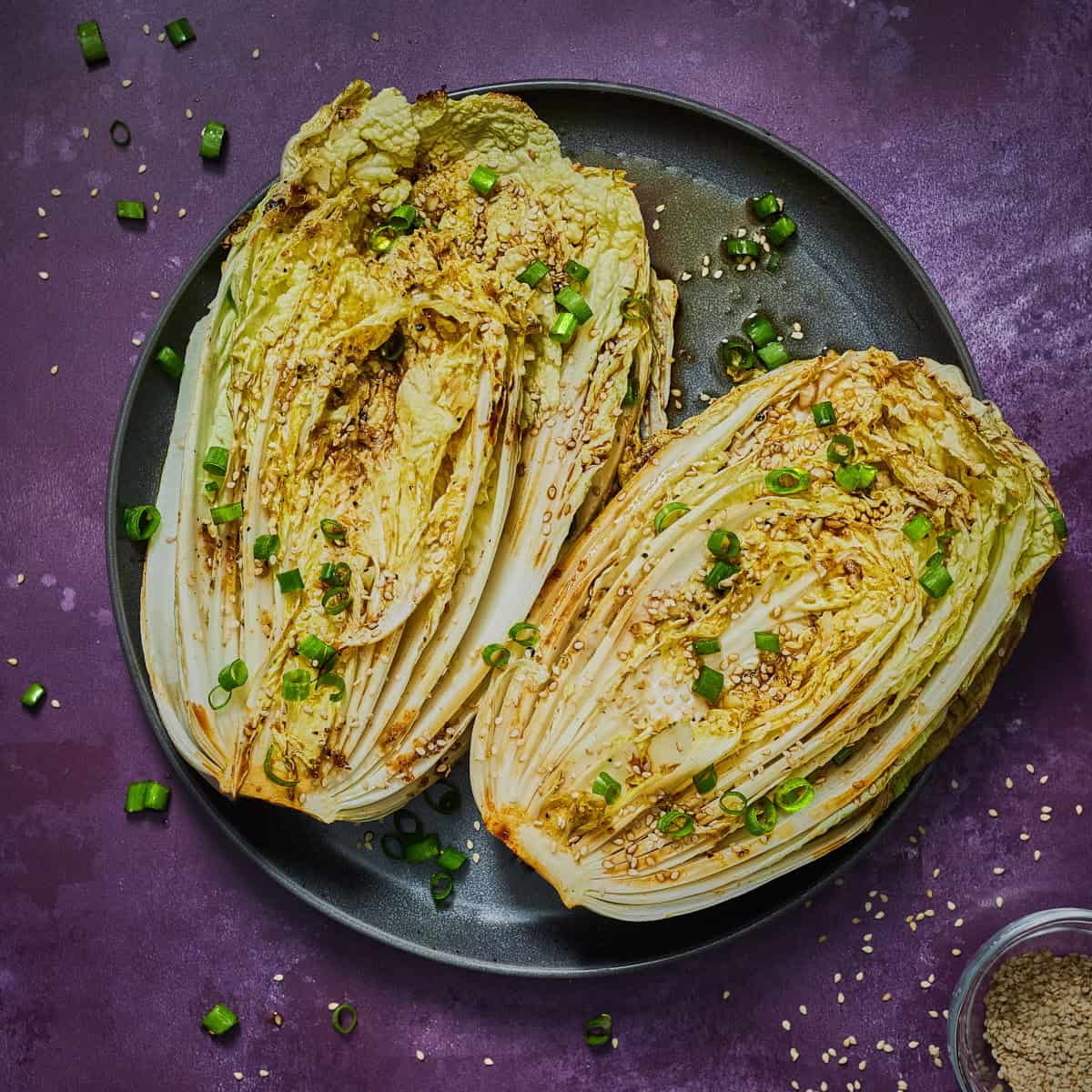
Cabbage is often underrated, but it has a lot to offer. Crisp Napa cabbage is coated in an Asian-inspired sauce in my Roasted Napa Cabbage. Combined with apples, it makes a simple side for fall and winter in my Instant Pot Red Cabbage and Apples. It adds texture and substance to this Beet Soup.
🥬 Ingredients
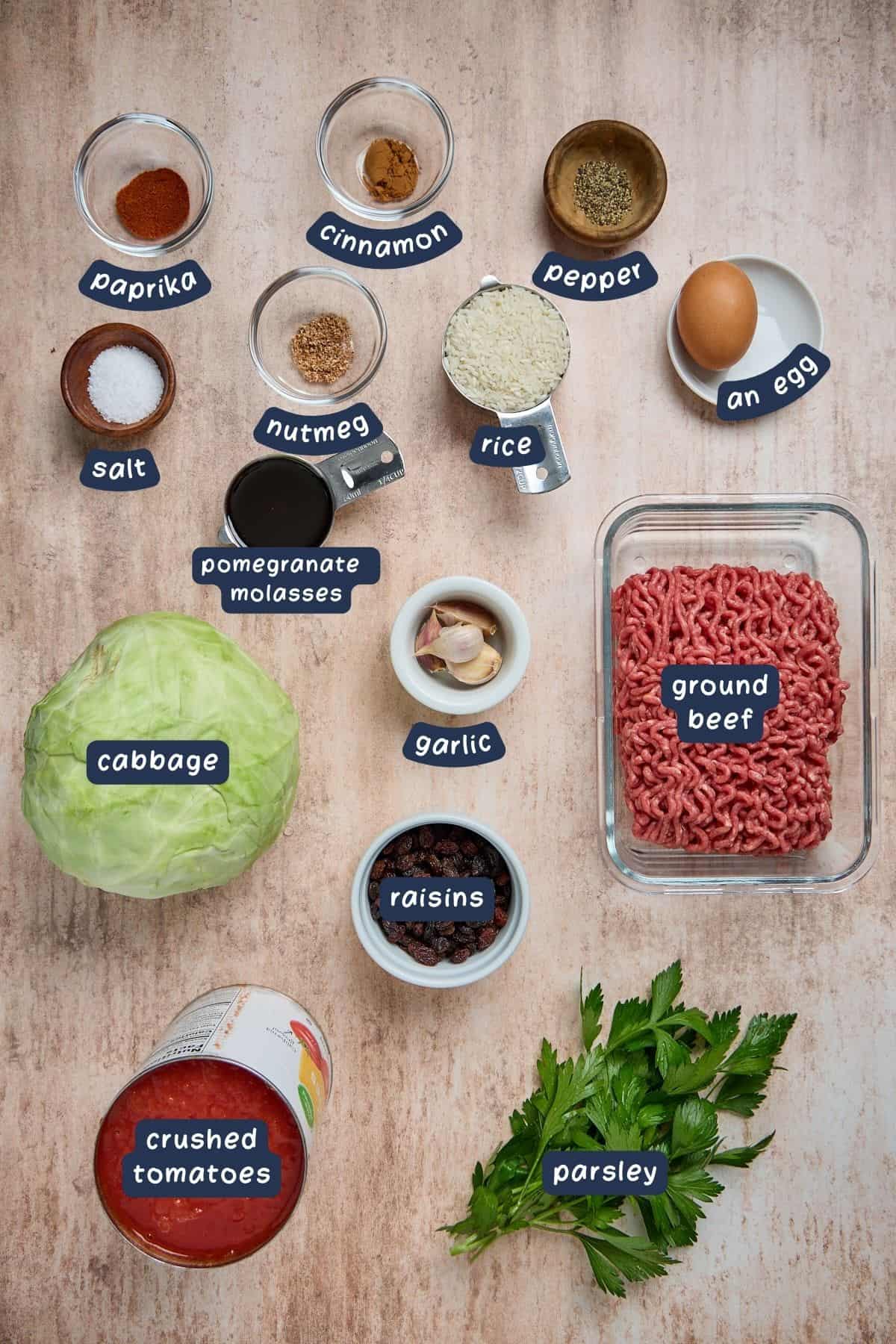
Here's everything you need to make these easy stuffed cabbage rolls.
Key Ingredients
- Green cabbage: A large head of standard green cabbage features larger leaves that are ideal for filling and rolling. Savoy or Napa cabbage can be used, although they'll cook slightly differently and may require more cooking time.
- Basmati rice: This long-grain, quick-cooking rice makes a hearty component to the filling. Other types of rice may be used, however, and you can save a little time by using leftover rice from take-out or another meal.
- Ground beef: A main component for filling the cabbage leaves. You'll need a pound of ground meat.
- Garlic, paprika, cinnamon, nutmeg: For flavoring the filling and sauce.
- Crushed tomatoes: A large can of crushed tomatoes, or about four cups, makes an easy sauce for the base and topping of the cabbage rolls. Plain, fire-roasted, or even one with added herbs may be used. If you have fresh tomatoes, you can chop and blend them.
- Raisins: Traditionally used in Eastern European cooking, raisins help keep the ground beef filling moist and flavorful. Other dried fruits, such as currants, may be used as an alternative.
- Pomegranate molasses: Pomegranate molasses creates a tangy yet slightly sweetened tomato sauce that complements the savory nature of the cabbage nicely. If you're not familiar with pomegranate molasses, it's one of my favorite ingredients for adding vibrant flavor. It's great in salad dressings, sauces, and marinades. Despite being called molasses, it's actually not very sweet; instead, it has a deep richness. The best way I can describe it is like a more intense, syrupy, fruity balsamic vinegar.
Check out the recipe card below for the complete list of ingredients and quantities.
🍚 Substitutions and Variations
- Red cabbage: If you have red cabbage instead of green, that works just as well.
- Pomegranate molasses: Can be substituted with balsamic vinegar if unavailable.
- Ground turkey: Try making these cabbage rolls with ground turkey instead of beef.
- Rice: You can use any rice (or grain) you like. I like basmati because it cooks quickly.
- Vegetarian: Substitute roughly 2 cups of cooked lentils for the ground beef.
🔪 How to Make Polish Golumpki
Here's a step-by-step guide on how to prepare this recipe.
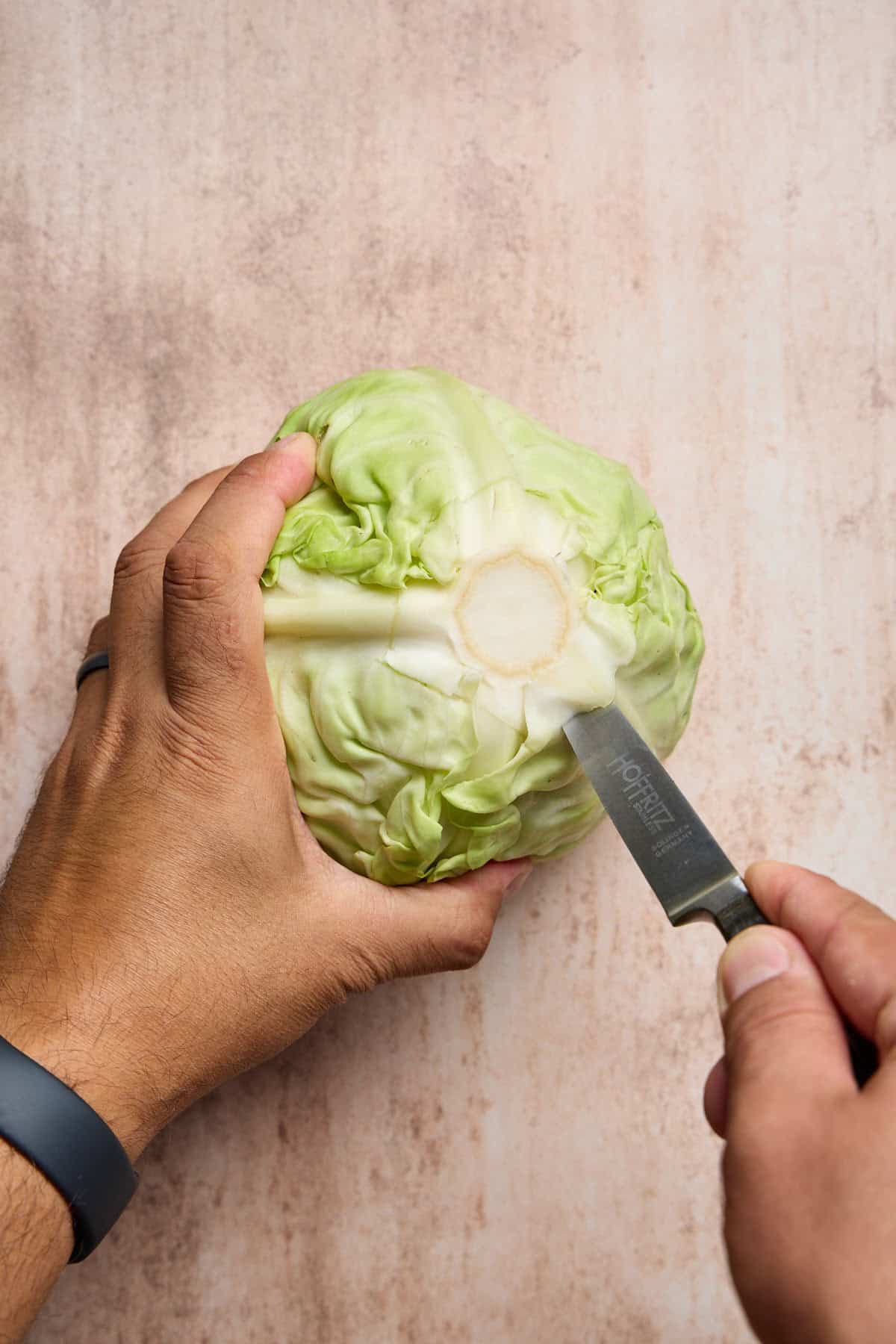
- Step 1: Cut the core out of the bottom of the cabbage using a sharp knife.
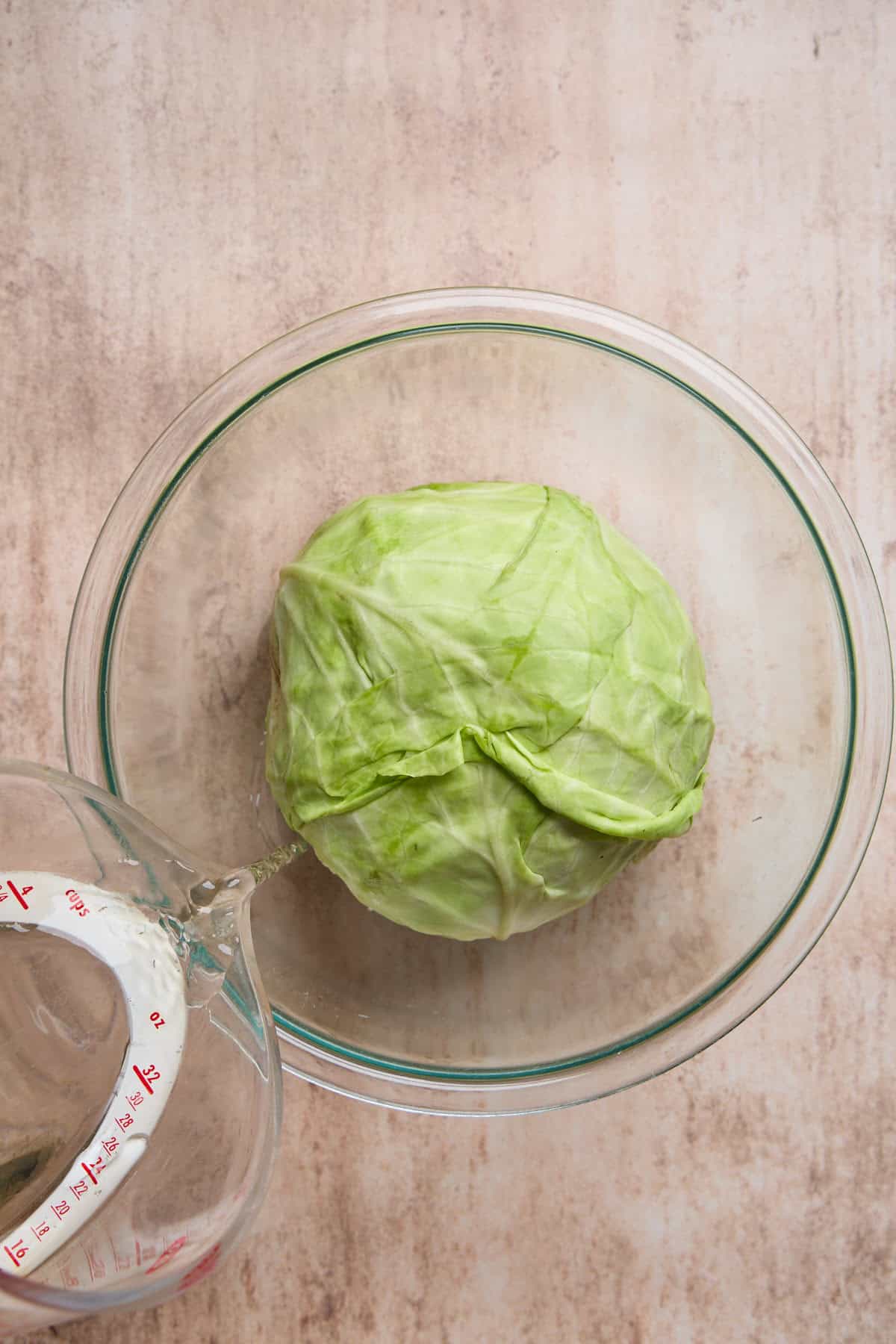
- Step 2: Place the cabbage in a large bowl, add a cup of water to the bottom, and microwave on high for 15-20 minutes. It should be easily pierced with a knife when done. Let cool briefly.

- Step 3: While the cabbage cooks, add rice to simmering water and cook for 7-8 minutes until tender, but not overcooked. Preheat the oven to 375°F.
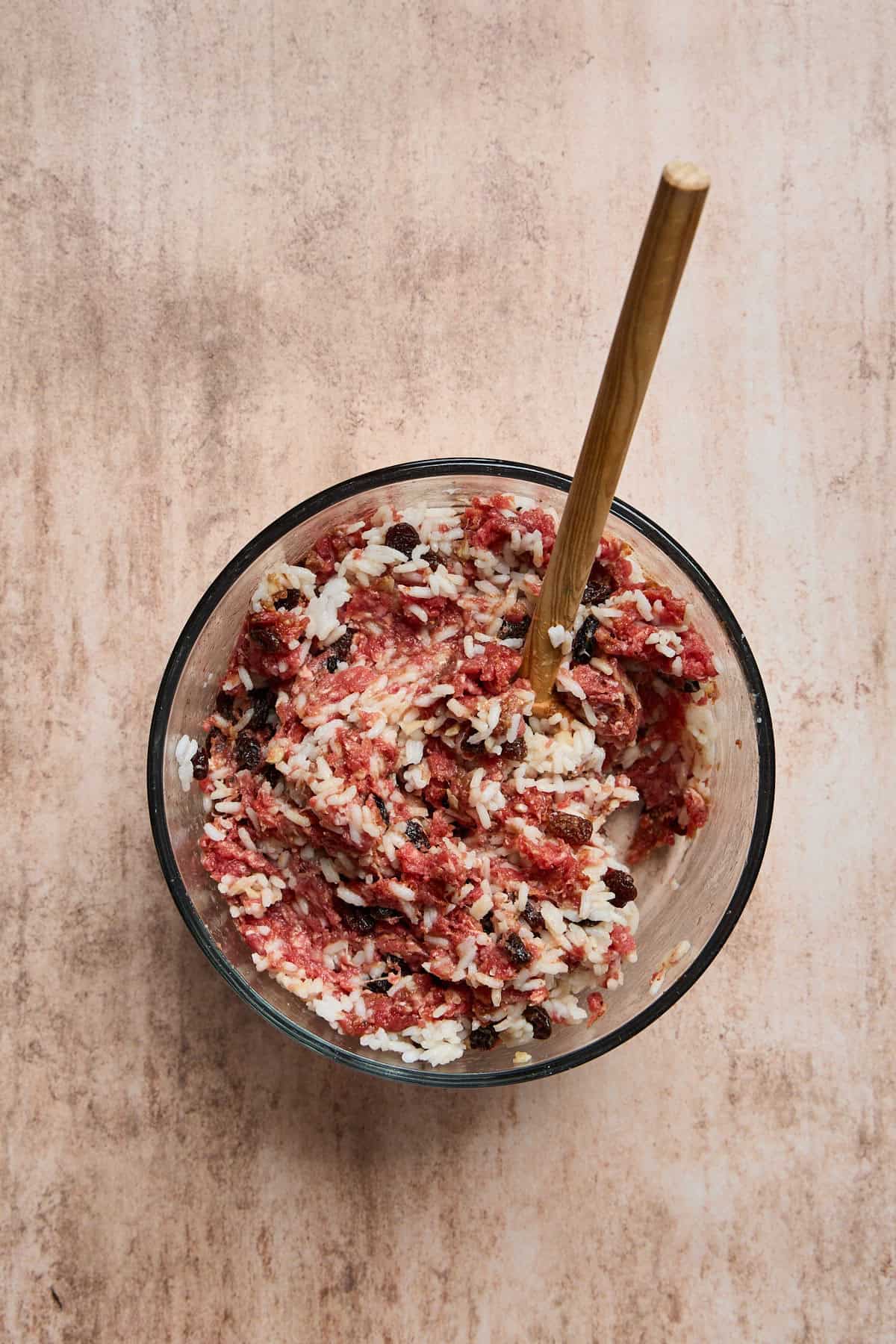
- Step 4: Combine the ground beef with the rice, egg, the minced garlic, raisins, pepper, cinnamon, nutmeg, paprika, and one teaspoon of salt. Stir well to combine.

- Step 5: Stir the pomegranate molasses and the remaining teaspoon of salt into the crushed tomatoes. Spread half of the mixture over the bottom of a baking dish. Add the two whole cloves of garlic.
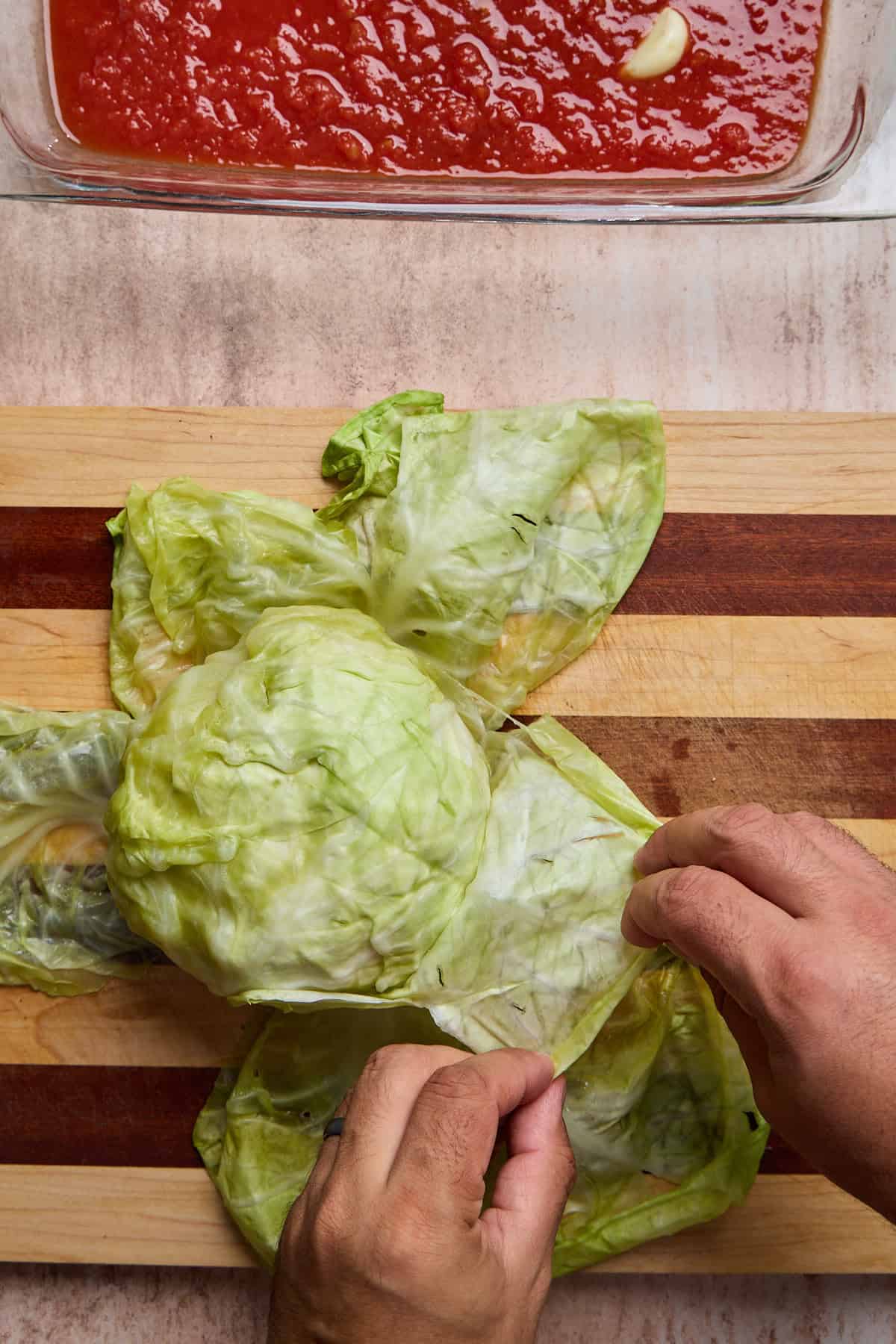
- Step 6: Gently pull the cabbage leaves one by one from the head of cabbage. Try not to tear them.
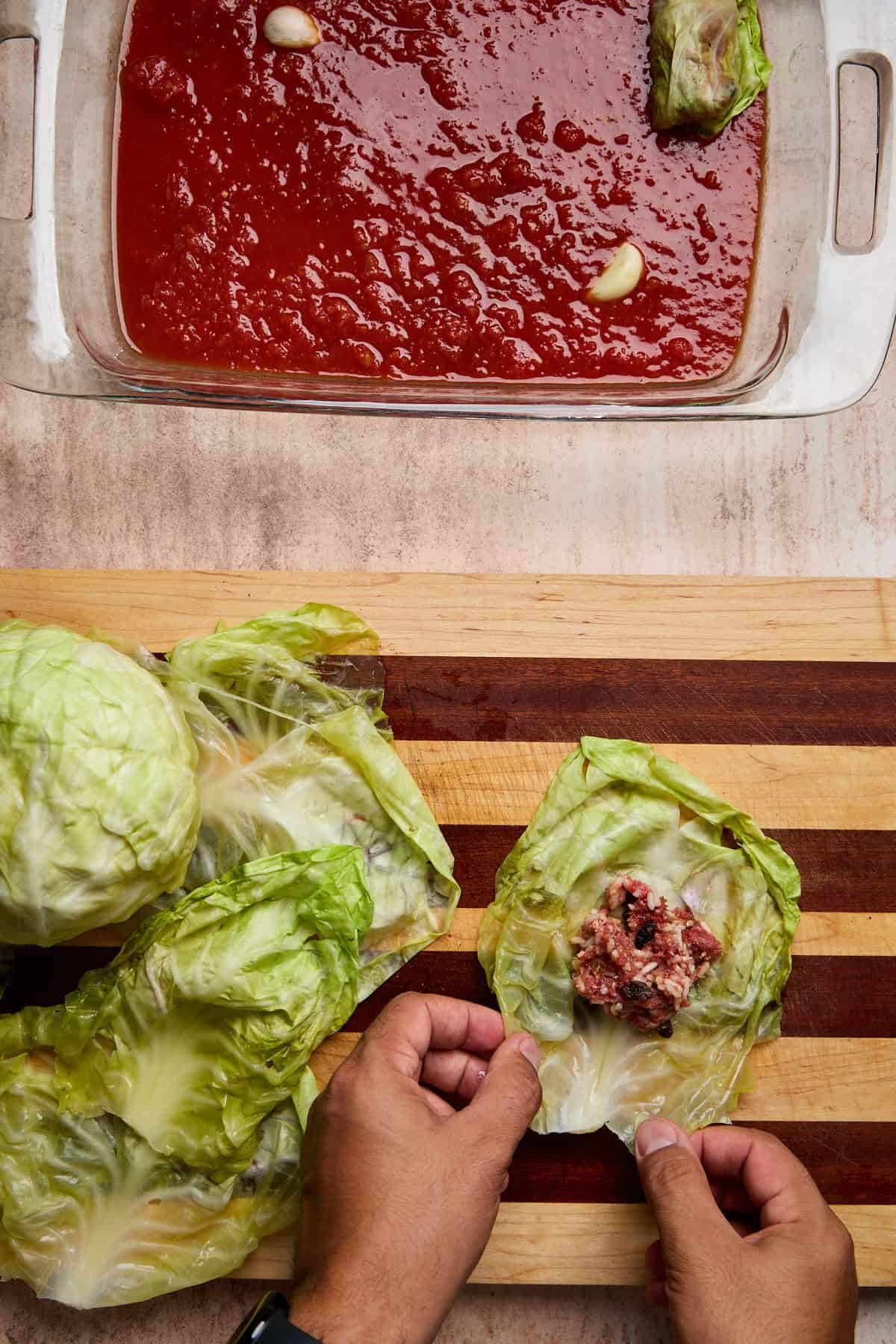
- Step 7: Spoon some filling onto the center of a cabbage leaf. Use approximately 1-2 tablespoons per leaf, adjusting the amount depending on the leaf's size.
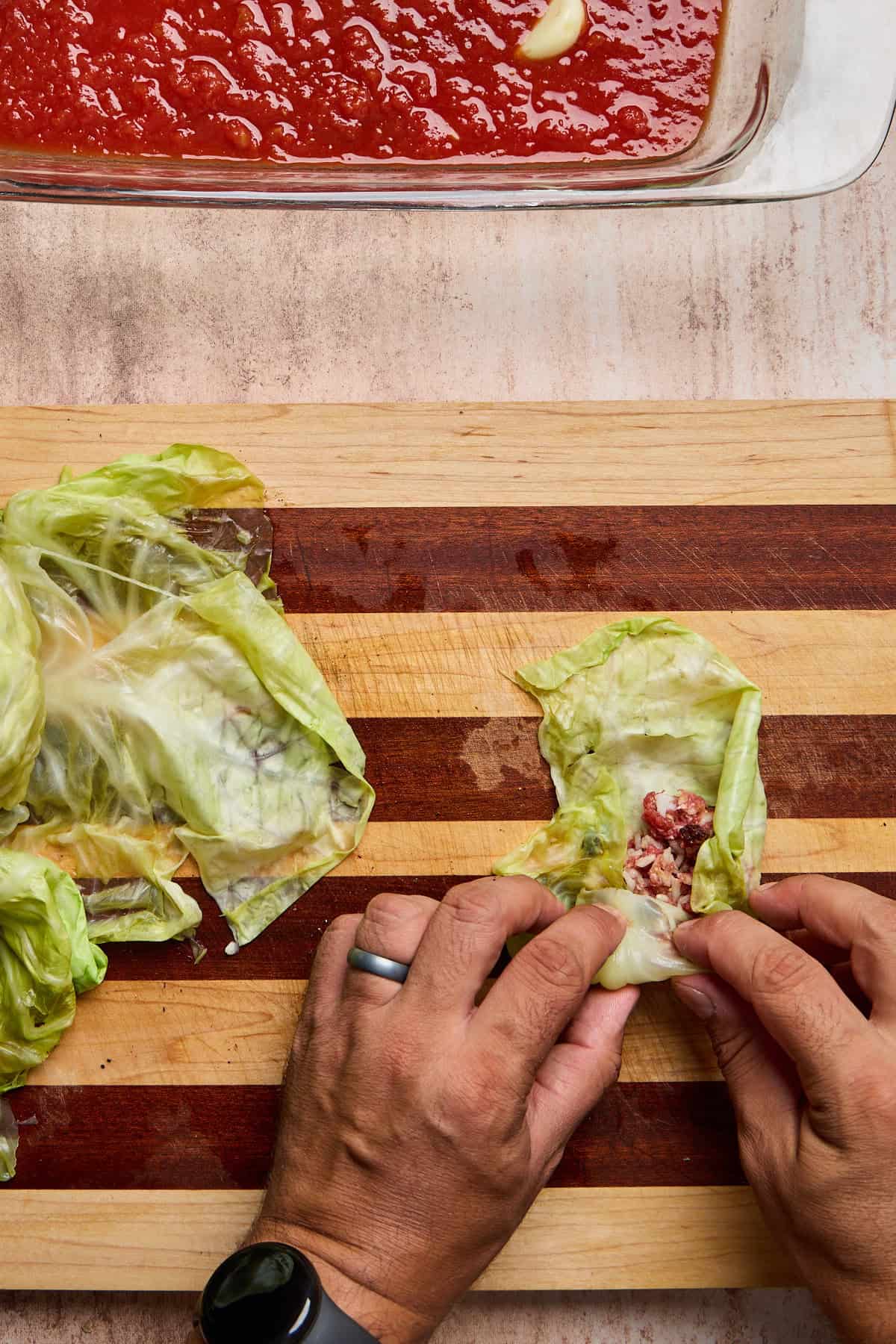
- Step 8: Fold the sides of the leaf inward, then roll the cabbage leaf from the bottom up, similar to rolling a burrito. Repeat this process with additional cabbage leaves until all the filling is used up.
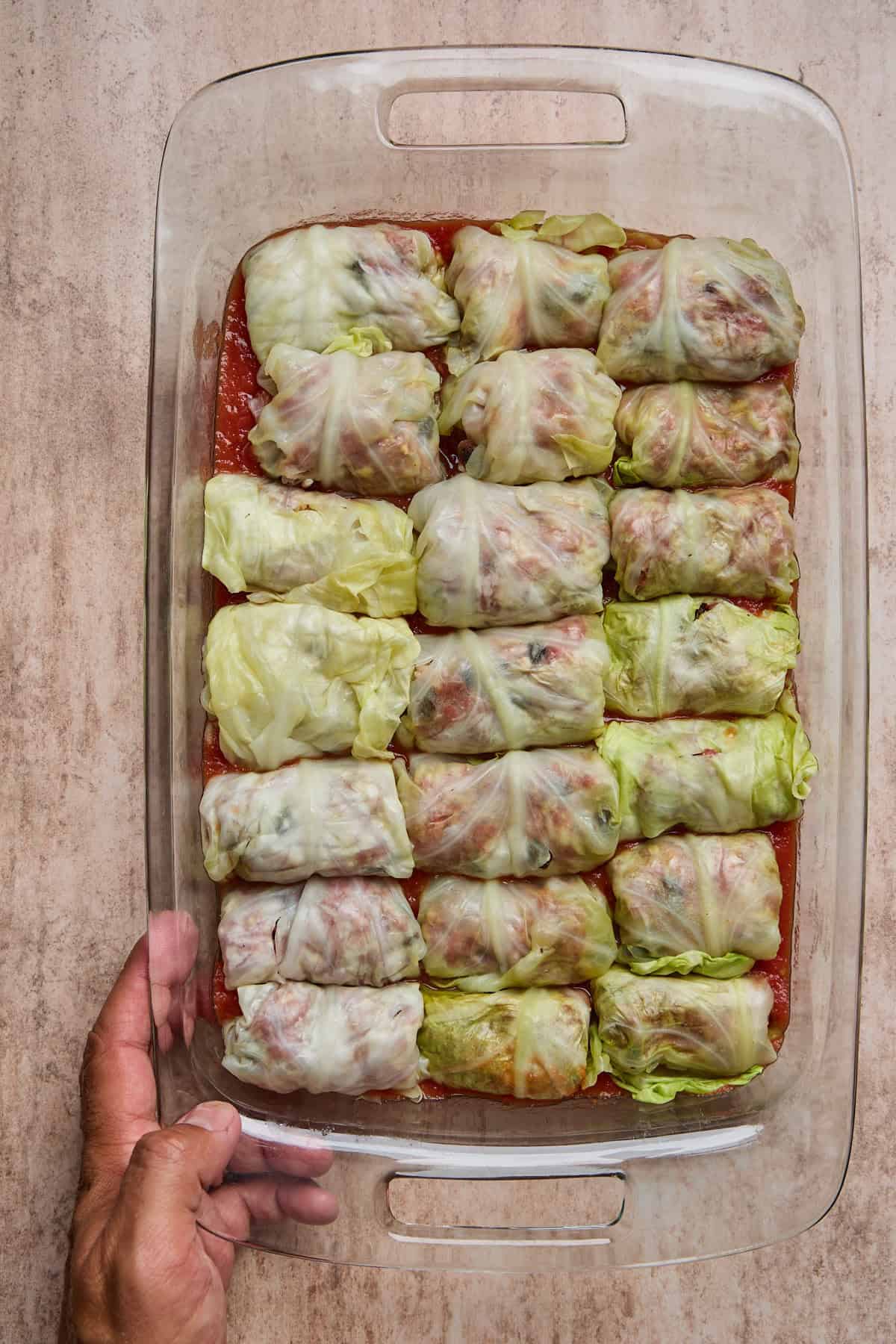
- Step 9: Place the stuffed cabbage leaves into the baking dish with the sauce.
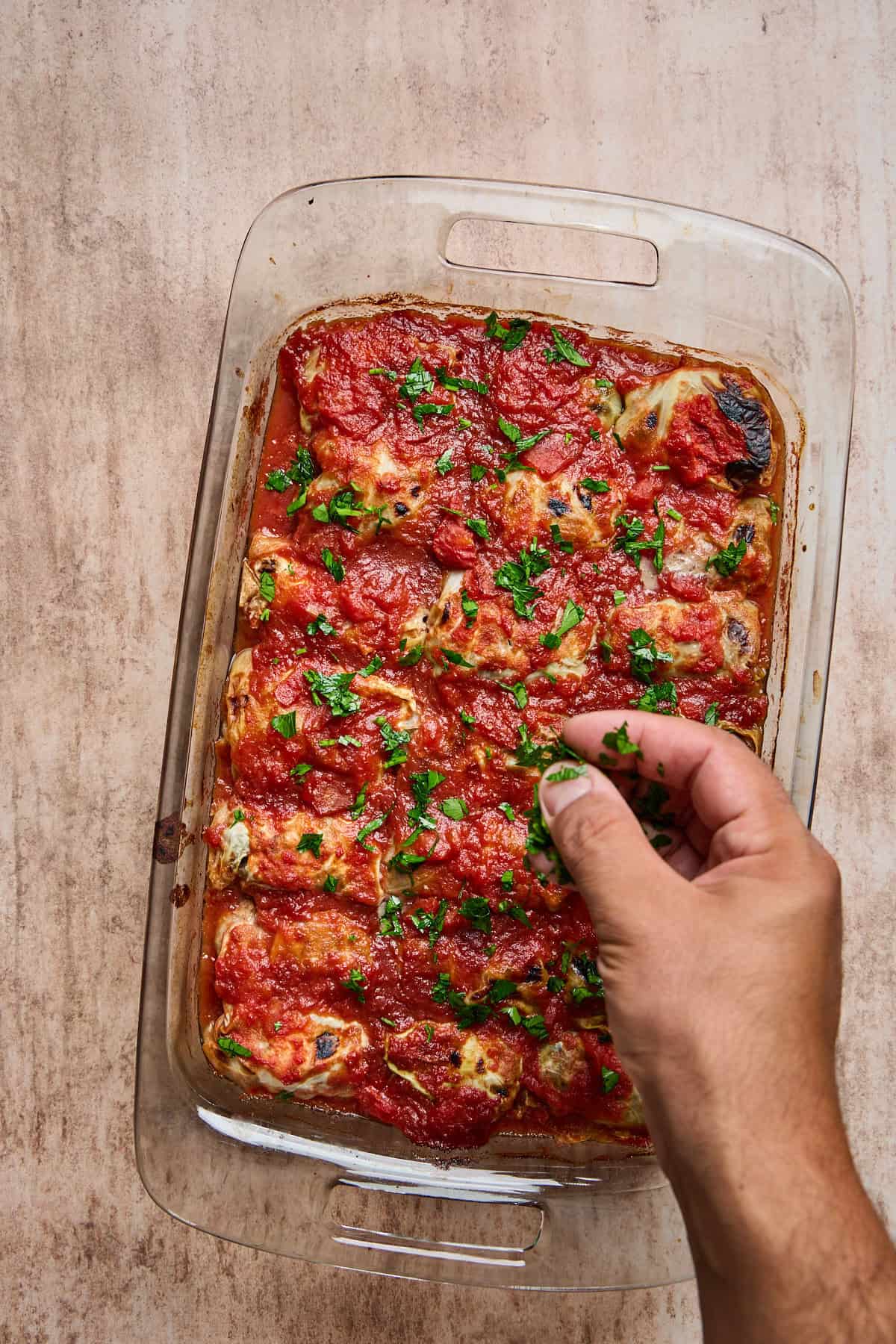
- Step 10: Top the stuffed cabbage with the remaining tomato sauce. Bake for 30 minutes. Place under the broiler for 4-5 minutes after baking for a little extra browning.
✨ Helpful Tips
- Don't overfill your cabbage leaves or they may tear. Which isn't a deal breaker, just cover them in sauce and no one will really know.
- You can save yourself a little time by steaming the cabbage and cooking the rice up to 3 days in advance of assembling the golumpki.
- Not sure how to cut that core out of the cabbage? Check out this video for a quick demonstration. What you don't want to do is cut the cabbage in half, which is what they will tell you in other videos when it comes to taking out the core. But we need the leaves intact in order to fill and roll them.
🍳 Equipment
Microwave: Used to steam the head of cabbage and save some time in the cooking process. I know not everyone loves the microwave; however, you can steam or boil the cabbage in a pot on the stove. Here's a tutorial for how to steam cabbage for cabbage rolls.
🥡 Storage
Fridge: Leftover golumpki can be stored covered in the refrigerator for 3 to 4 days. Uncooked cabbage rolls may also be prepared in advance and stored in the refrigerator for up to two days before cooking.
Freezer: Freeze cooked or uncooked cabbage rolls in the baking dish or other freezer and oven-safe dish, tightly covered, for up to three months. Defrost in the fridge and bake as described, or if already cooked, until hot.
🙋🏻♂️ FAQ
Yes, they can. Prepare the recipe up until the point of baking. Then cover the pan well with layers of plastic wrap and foil. Defrost in the fridge and bake as instructed. Or bake directly from the freezer, adding up to 15 minutes (or more) to the cooking time.
I've made cabbage rolls with several types of cabbage - green, red, savoy - and I think they all work. So it's more a matter of personal preference. However, make sure to use cabbage with large leaves so there's plenty of room for stuffing and rolling. Small cabbages aren't great for this recipe.
It's the Polish word for "little pigeon," which is what people liked to say the stuffed cabbages resemble. But they're a little less appetizing when you put it that way.
It's ok if some of the cabbage leaves tear. Just do your best to stuff and roll them, and turn them around in the dish so they stay intact. Then, cover them with sauce and no one will even know.
Sure. These golumpki can be prepared up to a day in advance. Make the cabbage rolls as described in the recipe, but cover and refrigerate before baking. When ready to bake, take the dish out of the fridge, let come to room temperature for a few minutes, and cook as usual.
🥔 Pairing
Try any of these recipes alongside this dish:
Print


📖 Recipe

Polish Golumpki Stuffed Cabbage Rolls
- Total Time: 1 hour 20 minutes
- Yield: 4-6 servings 1x
- Diet: Gluten Free
Description
This Polish golumpki recipe makes tender stuffed cabbage rolls filled with beef and rice, baked in a tangy tomato sauce. A hearty, traditional dish made easy with a helpful shortcut.
Ingredients
- 1 medium-large cabbage
- ½ cup white basmati rice
- 1 pound ground beef
- ½ cup raisins
- 1 egg
- 1 teaspoon paprika
- 1 teaspoon cinnamon
- ½ teaspoon ground nutmeg
- 4 cloves garlic, 2 minced, 2 peeled and left whole
- 2 teaspoons kosher salt
- ½ teaspoon ground black pepper
- 4 cups crushed tomatoes (or a 28-ounce can)
- ¼ cup pomegranate molasses
- 2 tablespoons chopped parsley (optional)
Instructions
- Prep the cabbage. Remove any tough or torn outer leaves from the cabbage. Use a paring knife to cut around the core on the bottom of the cabbage. Pull out the core and discard. Put the cabbage in a large bowl with a cup of water in the bottom. Cook the cabbage in the microwave on high power for 10-20 minutes, depending on the size of your cabbage. You should be able to easily pierce it with a knife when it's ready. Let it cool for at least 5 minutes, or until it is cool enough to handle.
- Cook the rice. While the cabbage is in the microwave, put the rice in a small pot. Cover with water and simmer over low heat until mostly cooked, about 7-8 minutes. It's ok if it's a little undercooked at this point. Drain off any excess water.
- Make the filling. Preheat the oven to 375°F. In a bowl, combine the ground beef with the raisins, egg, paprika, cinnamon, nutmeg, minced garlic, one teaspoon of salt, and pepper. Add the rice when it's cooked. Stir with a wooden spoon to combine.
- Make the sauce. In another bowl, combine the crushed tomatoes, pomegranate molasses, and the remaining teaspoon of salt. Pour half of this into the bottom of a 9x13-inch baking dish along with the two whole cloves of garlic.
- Assemble the golumpki. Carefully remove the leaves from the cabbage one by one. Scoop a heaping tablespoon or two of filling onto the middle of each leaf. Fold in the sides, then fold up the bottom and roll upward. Place in the baking dish with the seam side facing down.
- Finish and bake. When all of the cabbage leaves are stuffed, spoon over the remaining sauce. Bake for 30 minutes. Turn on the broiler and place the dish underneath to brown for about 5 minutes for some extra browning. Top with parsley and serve.
Notes
Don't overfill your cabbage leaves or they may tear. Which isn't a deal breaker, just cover them in sauce and no one will really know.
You can save yourself a little time by steaming the cabbage and cooking the rice up to 3 days in advance of assembling the golumpki.
- Prep Time: 35 minutes
- Cook Time: 45 minutes
- Category: Main Dish
- Method: Baking
- Cuisine: Polish
🫑 Related Recipes
Looking for more vegetable-forward recipes like this one? Try these next:




Megan says
I can't mind the pomegranate molasses anywhere. Anything I can do in replace of it?
Steve says
Hi Megan. Sorry for my late response. The easiest alternative in this recipe is a splash of balsamic vinegar and a few pinches of sugar. You want a mix of acidity and sweetness.
Steve says
A classic comfort meal that's warm and filling. Hope you enjoy it as much as I do!